Vertical Herb Towers
When balcony horizontal square footage is prized for dining furniture, the only sustainable vector of growth is vertical. Stacking modular herb columns multi-fold your culinary yield while creating living, fragrant boundary walls.
Architectural Stacking Dynamics
Traditional horizontal rows of pots quickly consume precious floor space, leaving no room for a morning espresso chair. Vertical herb towers solve this constraint by utilizing gravity-fed irrigation and vertical wall real estate.
By mounting tiered cedar wall pockets or interlocking food-safe polypropylene columns against structural brick pillars, you achieve up to thirty distinct plant pockets within a footprint of just 0.25 square meters.
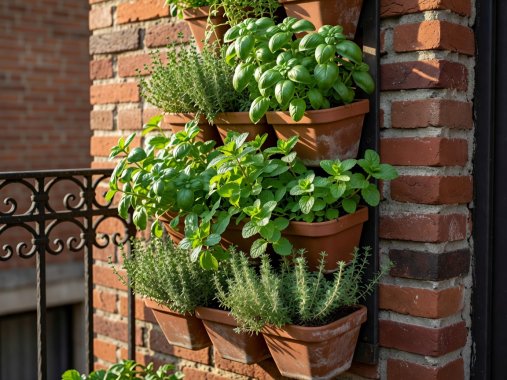
Culinary Herb Zoning Hierarchy
Different culinary herbs possess vastly divergent hydraulic and photon demands. Organizing them correctly across the vertical gradient is critical for balanced vigor:
| Tower Tier | Light Exposure | Moisture Level | Recommended Species | Culinary Use |
|---|---|---|---|---|
| Top Tier (Summit) | Direct Unshaded Sun | Dries Fast (Drainage apex) | Rosemary, Thyme, Winter Savory | Roasts, oils, marinades |
| Middle Tier | Partial Afternoon Shade | Balanced Aeration | Genovese Basil, Flat Parsley, Cilantro | Pesto, salads, sauces |
| Lower Tier (Base) | Filtered Shade | Higher Retained Humidity | Spearmint, Peppermint, Chives | Mocktails, cold drinks, garnishes |
Substrate Formulation for Vertical Columns
Standard potting soil compacts quickly inside tall columns, leading to anaerobic root zones at the base. We recommend our laboratory blend:
- 45% Coconut Coir: Lightweight, neutral pH, superior water retention without compaction.
- 35% Horticultural Perlite / Pumice: Retains essential root air channels against gravitational compression.
- 15% Screened Worm Castings: Sustained bio-organic nutrient release without synthetic salts.
- 5% Granulated Charcoal: Sweetens soil, adsorbs mineral excess, and prevents root rot.